The Beginner's Guide to Dry January
A new year always brings pressure to suddenly achieve all of your goals and reach your fullest potential. While making new year's resolutions is an excellent step towards achieving those goals, making resolutions you have to commit to for the entire year can be overwhelming. If decreasing your alcohol consumption or exploring sobriety are part of your resolutions this year, participating in Dry January is an approachable way to get started. January also marks national Substance Use Disorder (SUD) Treatment Month and is a time when many begin to reflect on their substance use habits and make strides towards rehabilitation and recovery. No matter where you are in your sobriety journey, FLACRA is by your side every step of the way.

Dry January
Dry January is a cultural phenomenon in which, after all of the boozy celebrations of late December, you commit to abstaining from drinking alcohol for the month of January. The idea originated in the U.K. in 2013 as a wellness challenge put on by Alcohol Change UK. It took social media by storm and has become an unofficial challenge that millions of people around the world participate in. Many New Year's resolutions include improving fitness levels and getting active. Cutting out alcohol is an attainable way to feel healthy and ready for the new year.
The Benefits of Doing Dry January
There are numerous health benefits to going sober, even if only for a month. Abstaining from drinking can improve sleep, help with weight loss, improve diet and eating habits, reduce liver fat and blood sugar levels, improve mood and energy levels, and result in increased physical activity due to increased energy and better rest.

If you choose to abstain from drinking for longer than just January, you will see even more health benefits. The long-term effects of drinking any amount of alcohol include an increased risk of several types of cancer, including throat, colon, breast (in women), and liver cancer. Excessive, long term alcohol use can also lead to high blood pressure, heart disease, liver disease, stroke, digestive problems, a weakened immune system, memory problems, and worsened mental health conditions. If you are interested in feeling the benefits of sobriety and protecting your health, taking part in Dry January is a great place to start.
Am I Sober Curious?
If you are questioning if alcohol has a negative impact on your life or wondering if decreasing your alcohol consumption would improve your relationships, habits, and health, then you might be sober curious. Sober curiosity is a growing trend among younger generations who have grown up cognizant of the negative effects of alcohol use on both physical and mental health and choose to enjoy life without its influence. Many sober curious individuals don't have an alcohol dependency and do not intend to be sober permanently. Whether you are interested in long-term or short-term sobriety, going dry for January is a great way to see if the sober lifestyle is beneficial for you.
Damp January
If Dry January feels like too big of a hurdle for you to jump over, damp January might be the perfect challenge for you. It doesn't involve completely abstaining from alcohol but still challenges you to cut down on your drinking habits. For example, if you normally drink a glass of wine or beer every night with dinner, try challenging yourself to only have a glass with dinner during the weekend. Or, if you currently only drink on the weekend, try challenging yourself to only drink every other weekend or only one day of each weekend. It's an even more approachable way to curb drinking habits and, if successful, can give you the confidence to try out "dry February" if you're so inclined. Simply reducing your alcohol consumption, without cutting it out entirely, can still have massive health benefits such as improving sleep, stabilizing mood, and decreasing inflammation, among others. If you're on the road to recovery, starting with small steps aimed at reducing harm to you and your health is an effective jumping-off point. It's hard to flip your lifestyle and habits overnight. Beginning with feasible and practical goals is the key to lasting and meaningful change.
Marci Hopkins' Message of Support
Marci Hopkins is the host of the morning talk show "Wake Up with Marci" and author to a memoir titled "Chaos to Clarity: Seeing the Signs and Breaking the Cycles". She is an advocate for sober living and a guide for many on their journey to sobriety. She herself overcame addiction and has proudly been sober for 10 years. She remains a passionate advocate for sobriety, recovery, the power of self-love, and inner healing. If you're considering Dry January this new year, take a moment to watch her supportive and insightful message.
FLACRA is Here for You
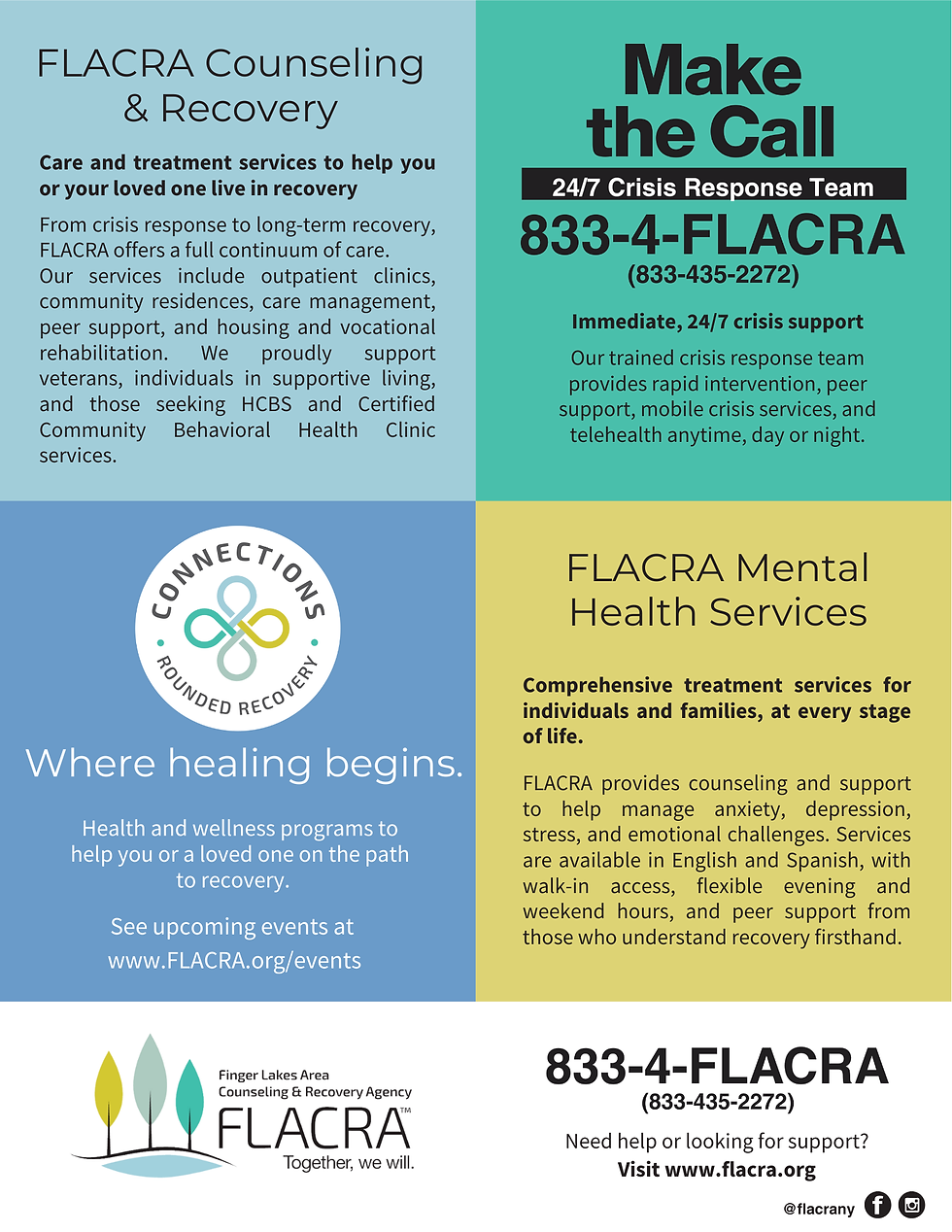
If you need a shoulder to lean on, advice for next steps in your sobriety journey, access to community resources, or to explore possible treatment options, FLACRA can help. Visit one of our Recovery Community Outreach Centers (Connections Rounded Recovery) to engage with our community. Join us for group art classes, health and wellness classes, meditation groups, book clubs, and more! If you are experiencing a crisis, need emergency support, or need to access treatment please call us at (833) 435-2272 and our Certified Recovery Peer Advocates will help you access the care and support you need.
Whether you are trying Dry January, damp January, or are open to exploring and learning more about treatment and recovery for you or a loved one, FLACRA is here to support you. You never have to navigate this alone. Call us at (833) 435-2272 anytime or visit our website to check out our services and programs. We wish you a safe and healthy new year!
Comments